

Pick up a garment-dyed t-shirt and you can feel the difference before you even look in the mirror: the cotton is softer, the surface has a lived-in, washed depth, and the color looks more like something you’ve broken in for years than a flat, factory-fresh blank. People who discover garment-dyeing often find it hard to go back to standard tees because the fabric feels more relaxed and the color has character instead of looking uniform and stiff. This buyer’s guide breaks down what garment-dyed clothing really is, how it compares to regular t-shirts, and how to choose the right heavyweight oversized tee for your wardrobe.
How Standard T-Shirt Dyeing Works
Most regular t-shirts are not garment dyed; they are made from fabric that has been dyed before it is cut and sewn. In industrial production, mills typically use piece dyeing, where a long roll of cotton fabric is run through a dye bath and squeezed between rollers to apply color evenly across the entire width of the cloth. For patterned fabrics, yarns may be colored first (yarn dyeing) and then woven or knitted into fabric, but the key point is the same: color is added before the t-shirt exists as a finished garment.
Because the fabric is dyed as one continuous piece, color tends to be very consistent from edge to edge and from garment to garment. This uniformity is ideal for basics and mass production, but it can also lead to that fresh-from-the-bag feeling: the cotton may feel a bit crisp at first, and the surface can look flat until repeated washing starts to soften the hand and break down the dye. Piece-dyed tees are efficient to manufacture and easy to standardize across many colorways, which is why they dominate the low-cost basics market.
What Garment Dyeing Actually Is
Garment dyeing flips that sequence. Instead of dyeing fabric first, the t-shirt is cut, sewn, finished as a complete garment, and only then dyed. The finished tees are loaded into a dye machine or vat and immersed in a dye bath so that the color penetrates the entire piece—body, seams, rib collar, and stitching—at the same time.
Because the garment is fully constructed, different parts absorb dye slightly differently. Seams, collars, and thicker areas can take on a deeper shade, while larger fabric panels often read a bit softer, creating subtle tonal highs and lows that look naturally worn-in from day one. Rather than a flat block of color, you get depth and variation that nods to vintage workwear and washed military pieces.
The dyeing cycle for cotton garments usually includes wetting, dye application, rinsing, and a final softener step before tumble drying. During these stages, the tees are effectively pre-laundered: the cotton relaxes, the surface softens, and most of the initial shrinkage is taken out in the factory instead of in your washing machine. This is why well-made garment-dyed t-shirts tend to arrive feeling like something you’ve already broken in rather than something you need to “wear into shape”.
At Borna Shop, the oversized tees are built from 6.5 oz heavyweight cotton, so the fabric starts out substantial enough to hold a boxy silhouette, but the garment-dye and wash process takes off the stiffness and gives it a pliable, drapey hand. The result is a tee that feels sturdy in the weight of the fabric but soft on the skin, with enough structure to support artwork and a relaxed, premium feel that matches the visual depth of the color.
How Garment-Dyed Tees Feel vs Regular Tees
Side by side, a standard piece-dyed tee and a garment-dyed t-shirt tell two different stories. A regular tee often feels more rigid when new, with a smooth but somewhat unremarkable surface, and the color tends to be a single flat tone from collar to hem. A garment-dyed tee, by contrast, has a softer, laundered hand from first wear and visible micro-variation in shade—slightly deeper at seams and edges, slightly washed across broader panels—so it already looks like a favorite.
This is why “what is garment dyed clothing” has become a real buyer question rather than a niche manufacturing detail: for people who care about both feel and aesthetics, the difference is immediately tactile and visual. Instead of waiting months for a new tee to lose its stiffness and take on character, garment dyeing compresses that entire aging curve into the first cycle of production.
The Six Garment-Dyed Colorways at Borna Shop
Borna Libertines uses six garment-dyed colorways across its oversized t-shirt line—Vintage White, Washed Denim, Khaki, Washed Charcoal, Washed Maroon, and Washed Black—chosen to echo the palette of urban concrete, paper, ink, and faded paint. Each colorway reacts to the garment-dye process in its own way:
Vintage White: A soft, off-white tone that feels more like paper or plaster than bright optic white, ideal for pairing with washed denim and neutral cargos when the artwork needs to stand out without the base feeling stark.
Washed Denim: A mid–blue shade that sits between vintage jeans and washed workwear, strong enough to anchor a look with black trousers or cargos but still muted enough to layer under chore jackets and overshirts.
Khaki: A warm, desaturated beige that reads like worn canvas, great with black or charcoal bottoms and perfect if you want that gallery-going, utilitarian feel without defaulting to black.
Washed Charcoal: Dark grey with enough fade to show surface texture, easy to dress up or down, and an obvious pairing with black cargos, wide-leg trousers, or layered monochrome fits.
Washed Maroon: A deep, wine-influenced red that takes garment-dye especially well, yielding rich highs and lows that work with both blue denim and dark technical pants.
Washed Black: A black that arrives already slightly washed down so it feels more like a favorite band tee than a stiff blank, working seamlessly with everything from light denim to full black stacks.
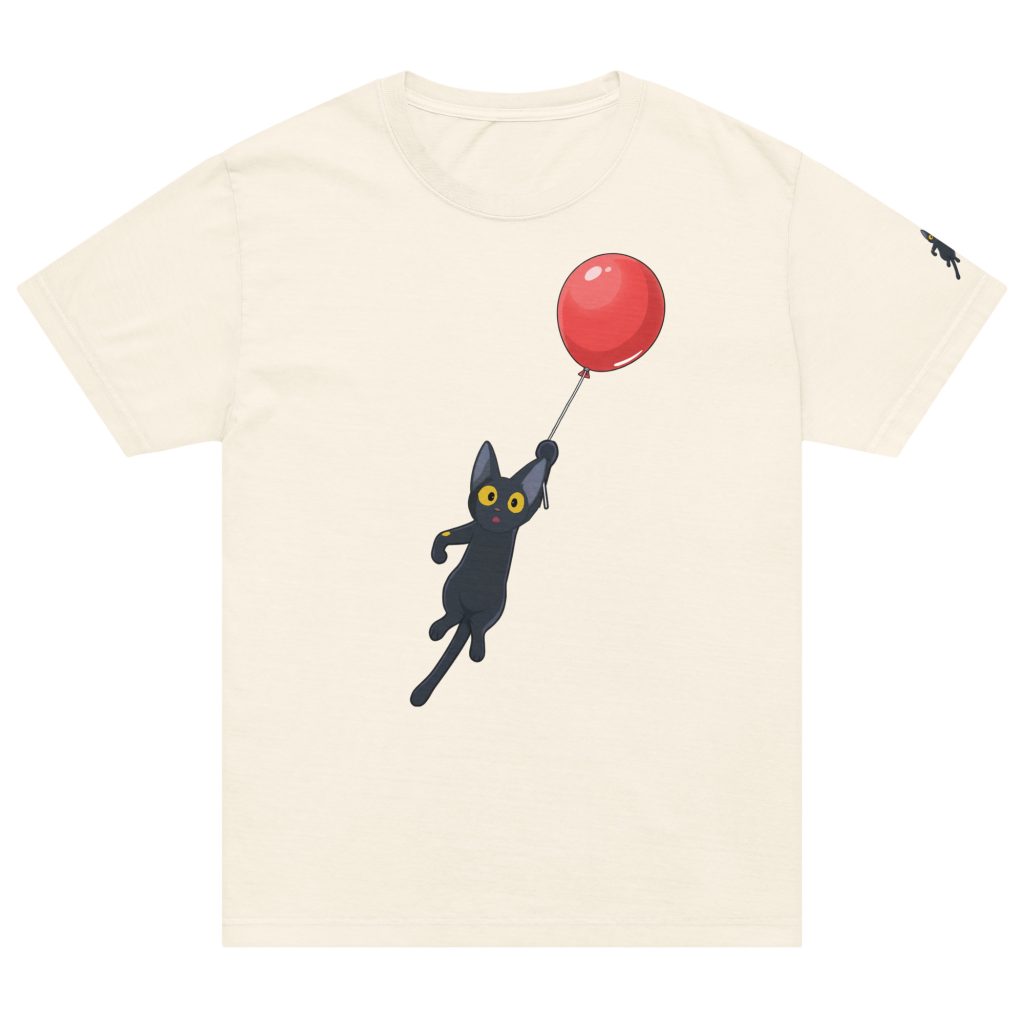
Each artwork-driven oversized tee at Borna Shop is available in these six colorways, so you can pick the graphic and then select the base tone that fits your wardrobe. The Erotica Oversized T-shirt, Liberty Oversized T-shirt, Sleepy Skeleton Oversized T-shirt, Cat Neko Flying Oversized T-shirt, and Cat Neko Protest Oversized T-shirt all use the same 6.5 oz garment-dyed base, which keeps sizing, hand-feel, and drape consistent as you move between designs.
Washed vs Un-Washed Garment Dyed – Does It Shrink?
A common concern with heavier cotton tees is shrinkage: buyers worry that a boxy oversized cut might tighten up after the first few washes. In a properly run garment-dye process, the tees are already washed and tumbled as part of dye-setting and finishing, which takes most of the shrinkage out at the factory stage. That is why many garment-dyed pieces are described as shrinking much less, if at all, in home laundering compared to standard piece-dyed garments that only get their first real wash in the consumer’s machine.
“Pre-washed for anti-shrink performance” essentially means the cotton has been through hot-wet processing and drying cycles before you ever wear it, so the fibers have already relaxed and consolidated. In practical terms, with Borna’s oversized tees you can expect the boxy fit, shoulder drop, and length to stay very close to what you receive, as long as you follow basic care guidelines: wash cold or at low temperatures, turn inside out, avoid aggressive tumble-drying on high heat, and hang-dry or tumble on low when possible.
Why the Oversized Boxy Fit Pairs with Garment Dyeing
Garment dyeing does more than change color; it affects how a tee drapes and how the silhouette reads on the body. Oversized boxy cuts with dropped shoulders and a slightly extended hem work particularly well with garment-dyed fabric because the pre-wash softening allows the heavy cotton to fall in clean, vertical lines instead of sticking out like cardboard. The result is a relaxed, modern streetwear shape that feels intentional—not like you just sized up a generic blank.
Borna’s oversized tees lean into this synergy: the 6.5 oz weight provides enough structure to carry bold prints and collage graphics, while the garment-dye and wash sequence gives the fabric a broken-in character that matches the underground art aesthetic. If you gravitate toward silhouettes that look like they came from a gallery gift shop or an independent label rather than a big-box retailer, the combination of boxy fit and garment-dyed color is a key part of that visual language.
For a full view of how the fit interacts with different prints and colorways, you can browse the complete oversized t-shirt category on Borna Shop: Oversized T-Shirt Collection.
FAQ
Is garment-dyed clothing more expensive?
Garment dyeing generally costs more than standard piece dyeing because each finished garment has to be processed individually or in smaller batches, rather than running thousands of meters of fabric through a single dye bath. The process also adds extra steps—wetting, dyeing, multiple rinses, softener treatments, and controlled tumble drying—which increase time, labor, and energy use per unit.
For buyers, this usually translates into a higher price point, but you are paying for tangible differences: softer feel from day one, reduced at-home shrinkage, richer color depth, and visual nuance that mass-produced basics typically do not have. Especially in heavyweight oversized tees, the premium is part manufacturing cost and part design decision to deliver a more elevated, long-lasting garment.
Does garment-dyed fabric fade faster?
Fading depends on the dye system, wash routines, and exposure to sunlight, but there are useful general patterns. Pigment-dyed garments—where color sits more on the surface—tend to fade faster and develop a vintage, washed look over time, especially with frequent washing and UV exposure. Garment-dyed pieces using more substantive dye types that bond with the cotton tend to keep their color more consistently, though they can still soften and mellow in shade with wear.
Because the garments are pre-washed and softened, some of the initial excess dye has already been removed in the factory, which helps stabilize the color before it reaches you. To slow additional fading, wash inside out in cold water, avoid harsh detergents and stain removers, and line dry or tumble on low rather than blasting on high heat.
What is the difference between garment dyed and pigment dyed?
“Garment dyed” describes when the tee is dyed (after it is fully cut and sewn), not what chemical system is used. “Pigment dyed” describes a particular dyeing approach that relies on pigment particles and a binder that attaches those pigments to the fabric surface; pigments may be applied in standard piece dyeing or as part of a garment-dye process.
Pigment-dyed tees usually have a slightly chalky, weathered appearance and are intentionally designed to fade and wash down over time, contributing to a vintage aesthetic. Garment-dyed tees may use pigments or other dye classes, but the unifying trait is that the entire finished garment is colored and laundered together, creating uniform softness and tonal variation across seams, collars, and body panels.
How do I wash a garment-dyed t-shirt?
Care is simple but matters if you want to preserve both color and fit. Wash garment-dyed tees inside out, in cold water, with similar colors, and use a mild detergent without optical brighteners or heavy stain-removal additives. Avoid bleach and spot-treatments that can strip or unevenly lighten the dye.
For drying, air-dry or tumble on low whenever possible to minimize shrinkage and protect the soft hand; high heat over time can stress cotton fibers and accelerate fading. Following these steps, a 6.5 oz heavyweight garment-dyed oversized tee will retain its shape, drape, and lived-in color character across many wash cycles.
Closing
If you are ready to feel the difference rather than just read about it, explore the garment-dyed 6.5 oz heavyweight oversized t-shirts at Borna Shop—each piece is cut in a boxy, dropped-shoulder silhouette, pre-washed for day-one softness, and available in six washed colorways that echo the textures of torn posters and city concrete. The full range of designs and colorways lives in the oversized t-shirt collection, where you can compare fits, graphics, and bases side by side and choose the garment-dyed t-shirt that best matches your own visual language.
Leave a Reply